


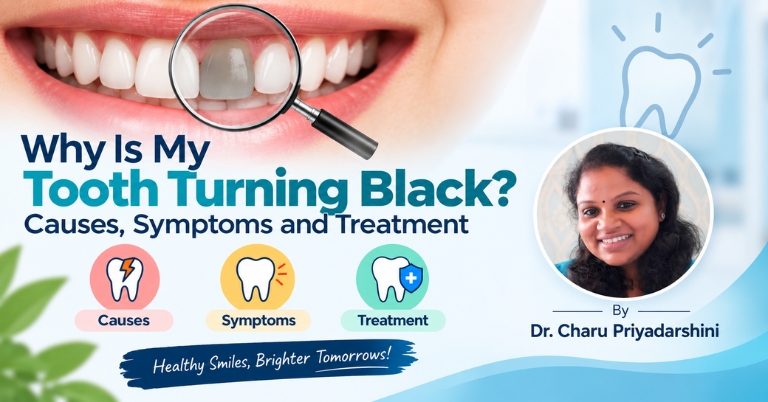
A tooth can turn black because of tooth decay, deep staining, trauma, or damage to the nerve inside the tooth. While some dark stains are only on the surface, a tooth that is becoming grey, brown, or black can sometimes indicate a deeper dental problem.
If you notice a tooth changing colour, especially if you also have pain, sensitivity, swelling, or a bad taste in your mouth, it is best to have it examined by a dentist rather than trying to remove the discolouration yourself.
There are several possible reasons for a black or dark tooth.
Advanced tooth decay is one of the common reasons a tooth may develop a dark brown or black appearance. As decay progresses, the tooth structure can break down and become discoloured.
You may also notice:
Tea, coffee, tobacco, and certain foods can cause dark staining on the outer surface of teeth. These stains do not necessarily mean that the tooth itself is decayed.
Professional dental cleaning can often help when the problem is limited to surface staining.
A tooth that has been hit or injured can sometimes become darker over time. Damage from an old fall, accident, or sports injury may affect the blood supply or nerve inside the tooth.
In some cases, the tooth may gradually change from its normal colour to grey, brown, or black.
If the nerve inside a tooth becomes severely inflamed, infected, or loses its vitality, the tooth may change colour.
This is particularly important when only one tooth becomes noticeably darker than the teeth around it. A dentist may need to examine the tooth and assess its nerve health before deciding on treatment.
Yes, many black or discoloured teeth can be treated and preserved, depending on the cause and how much healthy tooth structure remains.
Treatment may include professional cleaning for surface stains, a filling for decay, or root canal treatment when the pulp inside the tooth is infected or irreversibly damaged. A crown may sometimes be recommended to protect a tooth that has become weak.
The appropriate treatment can only be determined after a dental examination and, when necessary, dental X-rays.
You should arrange a dental examination if:
Importantly, the absence of pain does not always mean that the tooth is healthy. Some dental problems can progress without obvious symptoms.
Good oral hygiene can reduce the risk of tooth decay and staining. Brush twice a day with fluoride toothpaste, clean between your teeth regularly, limit frequent sugary foods and drinks, and maintain routine dental check-ups.
If you use tobacco or frequently consume staining beverages such as tea or coffee, discussing your oral-care habits with your dentist can also be helpful.
No. A black tooth can result from decay, surface staining, trauma, or changes within the tooth. A dental examination is needed to identify the actual cause.
It depends on why the tooth is dark. Surface stains may improve with professional cleaning, while internal discolouration may require different treatment.
No. Root canal treatment is not required for every dark tooth. It is considered when the pulp inside the tooth is infected or irreversibly damaged.
Not necessarily. If the tooth can be restored, preserving your natural tooth is generally preferable. Your dentist can assess whether it is treatable before considering extraction.
A change in tooth colour is easy to dismiss as “just a stain,” but a tooth that is becoming black should not be ignored. The important question is why the colour has changed.
Early professional assessment can help identify decay, trauma, or internal tooth problems and determine whether the tooth can be treated and preserved.
If you have noticed a black or unusually dark tooth, getting it checked is a better approach than waiting for pain to appear.
Copyright © 2026. All Rights Reserved




Leave a Reply