


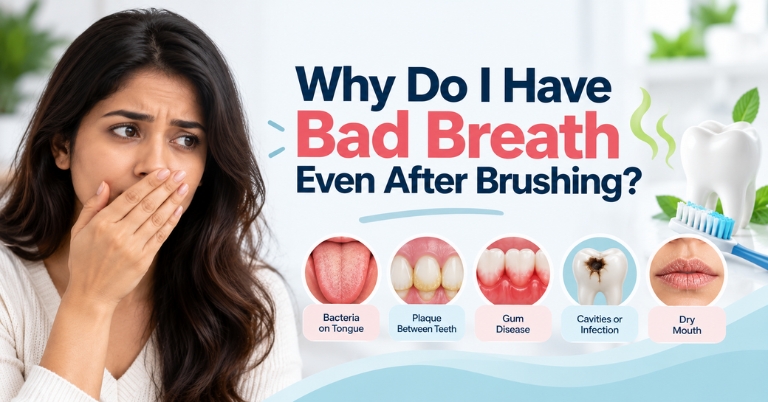
You brush your teeth twice a day, yet you still notice an unpleasant smell from your mouth. It can be frustrating and sometimes embarrassing, especially when you feel that you are already doing everything right.
So, why do you have bad breath even after brushing?
The answer is that brushing your teeth alone may not remove all the sources of bad breath. Odour-causing bacteria can remain on the tongue, between the teeth, around the gums, and in areas that a toothbrush cannot clean effectively. Bad breath can also be linked to dry mouth, gum disease, tooth decay, smoking, certain foods, or some medical conditions.
As a dentist, I believe persistent bad breath should be approached by identifying its underlying cause rather than simply covering the odour with mints or mouthwash.
Brushing your teeth does not always eliminate bad breath because the odour may be coming from bacteria on your tongue, plaque between your teeth, gum disease, tooth decay, dry mouth, dental infections, or other factors.
Your toothbrush mainly cleans the accessible surfaces of your teeth. It does not completely clean the spaces between teeth or the back portion of your tongue, where bacteria and food debris can accumulate.
If bad breath continues despite good oral hygiene, it is worth finding out why rather than repeatedly using breath fresheners.
One of the most commonly overlooked causes of bad breath is the tongue.
The surface of the tongue has many grooves and uneven areas that can trap bacteria, food particles and other debris. These bacteria can produce compounds responsible for unpleasant breath odour.
This is why brushing your teeth thoroughly but completely ignoring your tongue may not solve the problem.
Gently clean your tongue once a day using a tongue cleaner or scraper. Avoid scraping aggressively because excessive pressure can irritate the tongue. The NHS recommends gentle tongue cleaning as part of managing bad breath.
A toothbrush cannot effectively reach many of the tight spaces between teeth.
Food particles and plaque can remain trapped in these areas. When plaque accumulates, it can contribute to gum inflammation, tooth decay and bad breath. Interdental cleaning with floss or an appropriate interdental brush helps clean areas that brushing alone can miss.
This is one reason I recommend looking at the complete oral hygiene routine, not just how often a patient brushes.
Persistent bad breath can sometimes be a sign of gum disease.
Gingivitis and periodontitis are associated with plaque and inflammation around the gums. As gum disease progresses, deeper spaces called periodontal pockets can develop around teeth, providing areas where bacteria can accumulate. Persistent bad breath is a recognised symptom of periodontal disease.
You should pay particular attention if your bad breath is accompanied by:
These symptoms should be assessed by a dentist.
Sometimes the source of bad breath is a dental problem that is not immediately obvious.
Tooth decay, dental infection, food trapped around a damaged tooth, or problems with an existing restoration can contribute to unpleasant odour. Dental infections and tooth decay are recognised oral causes of bad breath.
This is why continually using mouthwash without addressing a cavity or infection may only mask the problem temporarily.
Saliva plays an important role in keeping the mouth clean. It helps wash away food particles and contributes to maintaining a healthy oral environment.
When saliva production is reduced, bacteria and debris can remain in the mouth more easily. Dry mouth, also known as xerostomia, can therefore contribute to bad breath.
You may have a dry mouth if you frequently experience:
Some medicines and certain medical conditions can cause dry mouth, so persistent symptoms deserve evaluation.
Drinking water regularly and using sugar-free chewing gum may help stimulate saliva in appropriate cases. However, the underlying cause of persistent dry mouth should also be investigated.
Certain foods can temporarily affect the smell of your breath.
Garlic, onions and some strongly flavoured or spicy foods can cause noticeable odour. Some of the compounds responsible can enter the bloodstream after digestion and later affect the air you breathe out.
This type of bad breath is usually different from persistent bad breath caused by an oral health problem.
Smoking and tobacco use can directly contribute to unpleasant breath. Tobacco can also increase the risk of gum disease, which itself can cause persistent bad breath.
For someone experiencing chronic bad breath, reducing or stopping tobacco use is an important part of improving both oral and general health.
A fresh minty smell after using mouthwash does not necessarily mean the underlying cause has been treated.
The American Dental Association explains that cosmetic mouthrinses can temporarily mask bad breath, while some therapeutic mouthrinses contain active ingredients intended to help control oral bacteria and conditions associated with bad breath. Mouthwash should be considered an addition to oral hygiene, not a replacement for brushing and cleaning between the teeth.
The right mouthwash depends on your individual oral health needs, so it is better to choose one with guidance from your dentist when persistent bad breath is present.
If your breath smells unpleasant soon after brushing, it may indicate that the main source of the odour has not been addressed.
For example, you may be brushing your teeth correctly but still have:
A coated tongue: Bacteria can remain on the tongue surface.
Plaque between teeth: Food and plaque may remain in areas your toothbrush cannot reach.
Gum disease: Inflamed gums and periodontal pockets can harbour bacteria.
Dry mouth: Reduced saliva can make it harder for the mouth to naturally clear debris.
Tooth decay or infection: A damaged tooth can sometimes contribute to persistent odour.
Finding the source is more useful than simply brushing harder or using more mouthwash.
Many people assume persistent bad breath must come from the stomach. However, most bad breath originates in the mouth.
Oral bacteria, tongue coating, plaque, gum disease, tooth decay and dry mouth are important causes. In some cases, conditions outside the mouth, such as reflux, tonsil problems or certain medical conditions, may contribute.
Therefore, a dental evaluation is often a sensible first step when persistent bad breath has no obvious explanation.
There is no single treatment that works for every person because the treatment depends on the cause.
A good daily routine includes:
The NHS recommends gently brushing your teeth and gums at least twice a day for around two minutes using fluoride toothpaste.
Gently clean your tongue once a day to help remove bacteria and debris.
Use floss or another suitable interdental cleaner once a day. Toothbrush bristles alone cannot adequately clean tight spaces between teeth.
Adequate hydration can help when dry mouth is contributing to bad breath. Persistent dry mouth should still be assessed to identify possible causes.
Dentures, retainers, bridges and other oral appliances can collect food particles and bacteria if they are not cleaned correctly.
Routine dental examinations can identify plaque buildup, gum disease, cavities, infections and other potential sources of bad breath.
Occasional bad breath is common. However, persistent bad breath should not simply be ignored.
The NHS recommends seeing a dentist when bad breath does not improve after a few weeks of self-care, particularly when accompanied by painful, swollen or bleeding gums, toothache, wobbly adult teeth or denture problems.
I would particularly recommend a dental examination if you also notice:
When a patient comes to us with persistent bad breath, the important step is to identify the possible source.
A dental examination can include checking:
Teeth: To look for cavities, cracks, infections and faulty restorations.
Gums: To check for inflammation, bleeding, periodontal pockets and signs of gum disease.
Tongue: To assess tongue coating and other oral conditions.
Oral hygiene: To identify plaque and areas that may be difficult to clean effectively.
Saliva: When dry mouth is suspected, the patient’s symptoms, medical history and medications may be reviewed.
Depending on the findings, additional dental treatment or referral to another healthcare professional may be appropriate.
No.
Bad breath is common and can be caused by something as simple as food, temporary dry mouth or inadequate cleaning of the tongue and spaces between teeth.
However, persistent bad breath can sometimes be a sign of an underlying dental condition, particularly gum disease or tooth decay.
The key is not to panic, but also not to ignore a problem that keeps returning.
Yes, tongue cleaning can be a useful part of an oral hygiene routine.
The tongue can collect bacteria responsible for unpleasant odour, particularly toward the back of the tongue. Gently cleaning the tongue can help reduce this buildup.
A tongue cleaner is not a replacement for brushing, flossing or professional dental treatment when an underlying dental condition is present.
Morning breath is common because saliva production decreases during sleep.
Reduced saliva means the mouth is less effectively cleansed overnight, allowing bacteria and debris to contribute to odour. Mouth breathing can make dryness worse.
Morning breath that improves after brushing, tongue cleaning, eating or drinking is usually different from bad breath that persists throughout the day.
Persistent daytime bad breath deserves closer attention.
Brushing your teeth but still having bad breath does not necessarily mean you are doing something wrong. It may mean that the source of the odour is somewhere your toothbrush is not reaching or that another oral health issue is present.
The tongue, spaces between teeth, gums, cavities, dental infections and dry mouth are all possible contributors. Other factors such as smoking, certain foods and some medical conditions may also play a role.
Instead of repeatedly using mints or mouthwash to hide the smell, focus on identifying its cause.
At Dr. Charu’s Multispeciality Dental Clinic in Coimbatore, detailed diagnosis and treatment planning are carried out before dental procedures. Dr. Charu Priyadarshini has more than 16 years of clinical experience and advanced training in areas including restorative dentistry, aesthetic dentistry, implants, orthodontics, prosthodontics and endodontics.
If your bad breath continues despite maintaining good oral hygiene, a dental examination can help determine whether the cause is related to your teeth, gums, tongue, dry mouth or another condition.
Brushing may not remove bacteria from your tongue or between your teeth. Bad breath can also be related to gum disease, tooth decay, dry mouth, smoking, certain foods or other conditions.
Not always, but persistent bad breath can be a symptom of gum disease. It is particularly important to have your gums checked if you also have bleeding, swelling, tenderness or loose teeth.
A visible tongue coating, particularly toward the back of the tongue, may be associated with odour-causing bacteria. Gentle daily tongue cleaning can help reduce bacterial buildup.
Yes. Tooth decay and dental infections can contribute to bad breath, especially when food and bacteria collect around damaged areas.
Yes. Reduced saliva can contribute to bad breath because saliva helps wash away food particles and supports a healthy oral environment.
Mouthwash can help in some cases, depending on its ingredients and the cause of bad breath, but it does not replace brushing and interdental cleaning. Cosmetic mouthwash may only temporarily mask odour.
Gentle tongue cleaning once a day is recommended by the NHS as part of managing bad breath.
See a dentist when bad breath continues for a few weeks despite good oral hygiene, or sooner if it occurs with bleeding or swollen gums, toothache, loose teeth or other dental symptoms.

Copyright © 2026. All Rights Reserved




Leave a Reply