


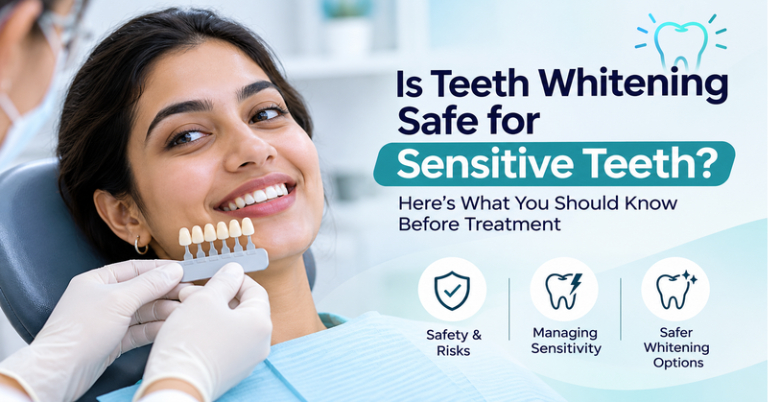
Want a brighter smile but worried that teeth whitening might make your sensitive teeth worse? You are not alone. Many people experience discomfort when consuming hot tea, cold water, ice cream or sweet foods. If you already have sensitive teeth, the thought of undergoing a whitening treatment can naturally raise concerns.
The good news is that teeth whitening can be safe for people with sensitive teeth when the treatment is properly assessed and supervised by a dental professional. However, the right whitening method, product concentration and treatment duration play an important role in reducing discomfort.
Before choosing a teeth whitening treatment, it is important to understand why tooth sensitivity occurs, how whitening products work and what precautions can help protect your teeth.
Yes, teeth whitening can be safe for sensitive teeth, but it depends on the underlying cause and severity of the sensitivity.
Most professional whitening treatments use hydrogen peroxide or carbamide peroxide to break down stains on the tooth surface and within the enamel. During this process, some people may experience temporary sensitivity because whitening ingredients can penetrate the enamel and reach the underlying dentin.
If you already have sensitive teeth, whitening may temporarily increase discomfort. However, a dentist can evaluate your oral health and recommend a suitable treatment approach.
Professional teeth whitening is generally a better option than experimenting with strong over-the-counter whitening products without understanding their ingredients or instructions.
Important: If your teeth are sensitive because of cavities, cracked teeth, gum recession or exposed roots, these conditions should be evaluated and treated before starting whitening.
Tooth sensitivity occurs when the protective enamel becomes thinner or when the underlying dentin is exposed. Dentin contains tiny channels that connect to the inner part of the tooth, making it more responsive to temperature changes and certain substances.
During teeth whitening, peroxide-based ingredients can temporarily increase sensitivity in some individuals.
Here are some common reasons why you may experience discomfort:
Whitening products can temporarily alter the moisture balance of teeth. This may make teeth feel more sensitive during or shortly after treatment.
Gum recession, enamel erosion and aggressive brushing can expose dentin. Whitening ingredients may cause additional discomfort in these areas.
Products with higher concentrations of hydrogen peroxide or carbamide peroxide may increase the likelihood of sensitivity, particularly when used incorrectly.
Untreated cavities, cracked teeth, worn fillings and gum disease can contribute to sensitivity. Whitening without addressing these problems may worsen discomfort.
The safest approach depends on your dental condition, sensitivity level and whitening goals. A dentist can help you choose an appropriate method.
Here are some commonly available options:
Professional whitening is performed under dental supervision using clinically established whitening products.
Your dentist examines your teeth and gums before recommending treatment. They may adjust the whitening concentration, application time or treatment schedule depending on your sensitivity.
Best for: People who want noticeable whitening results with professional guidance.
Custom whitening trays are prepared to fit your teeth. Your dentist provides the appropriate whitening gel and instructions for use.
The treatment can be adjusted to a gradual schedule, which may help people who experience sensitivity during whitening.
Best for: People who prefer gradual whitening under dental supervision.
Toothpaste containing ingredients such as potassium nitrate or stannous fluoride may help reduce tooth sensitivity.
Using desensitising toothpaste before and during a dentist-recommended whitening programme may improve comfort. It does not whiten teeth by itself unless it also contains suitable whitening ingredients.
Best for: People who experience mild sensitivity and need additional support before whitening.
Some whitening products are formulated with lower peroxide concentrations or additional desensitising ingredients.
However, a product labelled as suitable for sensitive teeth is not automatically safe for everyone. It is still important to check with a dentist before using it, particularly if you have ongoing tooth pain.
If you are planning to whiten sensitive teeth, a few precautions can help make the experience more comfortable.
If sensitivity becomes severe or persists, stop whitening and contact your dentist for an assessment.
Yes, some people with mild tooth sensitivity may be able to use suitable at-home whitening products. However, it is important to understand the difference between products that are clinically tested and unverified home remedies.
Whitening strips, gels and dentist-prescribed take-home trays may be options depending on your oral health.
Avoid using lemon juice, baking soda mixtures, charcoal powders or other abrasive DIY remedies to whiten your teeth. These methods may damage enamel or irritate your gums, potentially making sensitivity worse.
If you are unsure which product is suitable, consult a dentist before starting treatment.
Teeth whitening may not be appropriate until certain dental problems have been addressed.
Consider postponing whitening if you have:
Whitening treatments also do not change the colour of crowns, veneers, fillings or other dental restorations. Your dentist can explain what results you can realistically expect.
When used correctly, professionally supervised peroxide-based whitening treatments are not generally considered to cause permanent enamel damage. However, excessive use, incorrect application and unverified whitening remedies can harm your teeth and gums.
Sensitivity is usually temporary and often settles within a few days. The duration varies depending on the whitening method and individual dental condition. Severe or persistent discomfort should be checked by a dentist.
Yes, in some cases. A dentist should first identify the cause of sensitivity and determine whether whitening is suitable. A gradual or modified treatment plan may help reduce discomfort.
Professional whitening offers the advantage of an oral health assessment, appropriate product selection and dental supervision. Some home whitening products can also be effective when used correctly, but they may not be suitable for people with existing dental problems.
No, whitening-related sensitivity is generally temporary. However, people with existing dental conditions may experience longer-lasting discomfort if the underlying problem is not addressed.
It is advisable to limit tea, coffee and other strongly coloured foods and drinks immediately after whitening, as your teeth may be more susceptible to staining. Follow your dentist’s specific aftercare instructions.
Toothpaste containing potassium nitrate or stannous fluoride may help manage sensitivity. Your dentist can recommend a suitable formulation based on your oral health.
A brighter smile should never come at the expense of your dental health. If you have sensitive teeth and are considering whitening treatment, the first step is to understand what is causing your sensitivity.
At Charu Dental, Coimbatore, patients can seek professional dental guidance to understand their whitening options and choose an approach suited to their oral health and smile goals.
Whether you are concerned about tooth sensitivity, surface stains or discolouration, a dental consultation can help you understand the available treatment options.
Copyright © 2026. All Rights Reserved



Leave a Reply