


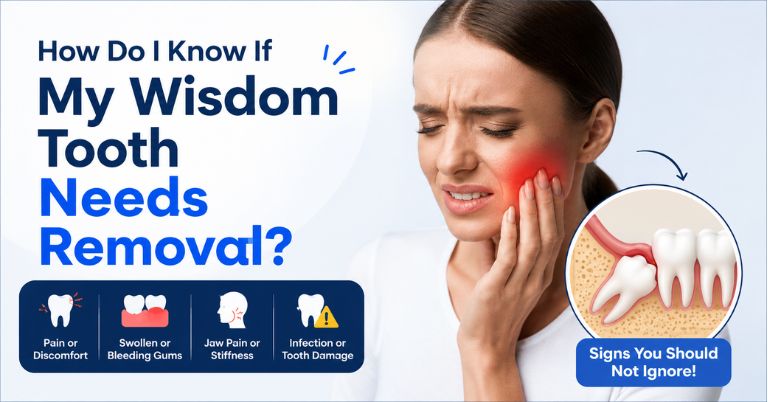
Wisdom teeth are the last molars to surface, coming in during late adolescence to early adulthood, from 17 to 25 years old. For some, these teeth emerge seamlessly, while for many others, they experience pain from the inability of their jaws to accommodate the new additions. This causes infections and damage to other teeth. For individuals interrogating the need for the removal of their wisdom teeth, it is better to understand the warning signs before it causes other problems.
Removal of wisdom teeth is not a requirement in all cases, but in these cases, it is likely your dentist will recommend a wisdom tooth removal.
The most common sign that wisdom teeth are becoming a problem is pain in the back of the mouth. At first, the pain will be on and off, becoming more frequent as they become impacted or as the eruption continues.
Wisdom teeth that are not fully erupted create a flap of gums that cover the newly emerging teeth, which collect bacteria along with food. This creates a swollen, tender, and bleeding gums that will be irritated while being brushed.
Impacted wisdom teeth will create the inability to fully open your mouth along with jaw pains from the tissue being pressed.
Love for your wisdom teeth is not common, as many dentists will recommend their removal if they are causing frequent pericoronitis. This is a localized swelling with pus and an awful odor along with difficulty swallowing.
Wisdom teeth often grow in at awkward angles, which causes them to grow into surrounding teeth. This often results in decay and damage of surrounding teeth and can cause gum disease.
Impacted wisdom teeth can sometimes lead to cyst formation around the tooth. When left untreated, these will cause damage to the jawbone and surrounding teeth.
Of the four wisdom teeth, only some may need extraction or none at all. If the wisdom teeth are healthy and don’t negatively impact the surrounding teeth, they may remain. Your dentist will assess them and recommend extraction based on their positioning.
The dentist will take digital dental X-rays to get an accurate picture of the wisdom tooth below the gums in order to determine the best course of action.
The extraction of wisdom teeth is considered a common outpatient procedure. The procedure is done with a local anesthesia, and for patients with anxiety, general anesthesia may be employed. The extraction of the tooth will largely depend on its placement. The surgeon has to be careful as to not impact the neighboring nerves or tissues. If the post-procedure instructions are closely adhered to, the patient can resume their normal daily activities after a few days.
Bundling up your wisdom teeth will only cause larger issues and more complex procedures in the future. If your symptoms include pain, swelling, difficulty with chewing, and repeated tooth or gum infections, it is best to get an evaluation from the dentist as soon as you are able.
There is no better protection for your long-term oral health than an early diagnosis. The best and only way to monitor the status of your wisdom teeth is having regular evaluations from the dentist, as they can determine the safety and need of an extraction with a professional’s eye.
Copyright © 2026. All Rights Reserved




Leave a Reply